
In all fifty states, you have the right to record police officers performing their duties in public. The First Amendment protects this — courts across the country have repeatedly affirmed it. But how recording works in practice varies state to state, and the differences matter.
In one-party consent states, you can record any conversation you're part of without telling anyone. In two-party states like California, Florida, Massachusetts, Pennsylvania, and Washington, all parties to a private conversation must consent.
The good news: police interactions in public are typically not considered private conversations. Traffic stops on the highway shoulder, encounters outside a bar, questioning at your front door — courts have repeatedly ruled you may record these without consent.
Two-party rules still come into play if you walk into someone's home, sit inside a closed police vehicle, or record a clearly private discussion. Knowing the line keeps your evidence admissible.
Across all fifty states, certain rights are settled law. You can record video and audio of an interaction taking place in a public space. You can hold your phone in plain view and refuse to turn it off. You can refuse to hand over your unlocked phone without a warrant.
Things to know before you press record: laws around recording inside private property are different from public-space rules. Distance and behavior matter when it comes to interfering with officer duties. And recording in two-party states still requires care for any conversation that isn't clearly public-facing.
Officers cannot legally seize your phone or delete footage just because you recorded them. If they do, the deletion itself can become evidence in a civil rights claim. Federal courts have repeatedly ruled that recording police is a clearly established constitutional right.
The exception is if you are physically obstructing the officer's work or trespassing on private property. Stay several feet back, keep your hands visible, and do not insert yourself into the encounter. Document, do not intervene.
HandsUp's Know Your Rights guides break down the specific rules for every state, including consent requirements, distance regulations, and what to say if an officer asks you to stop recording. Bookmark your state's page before you ever need it.
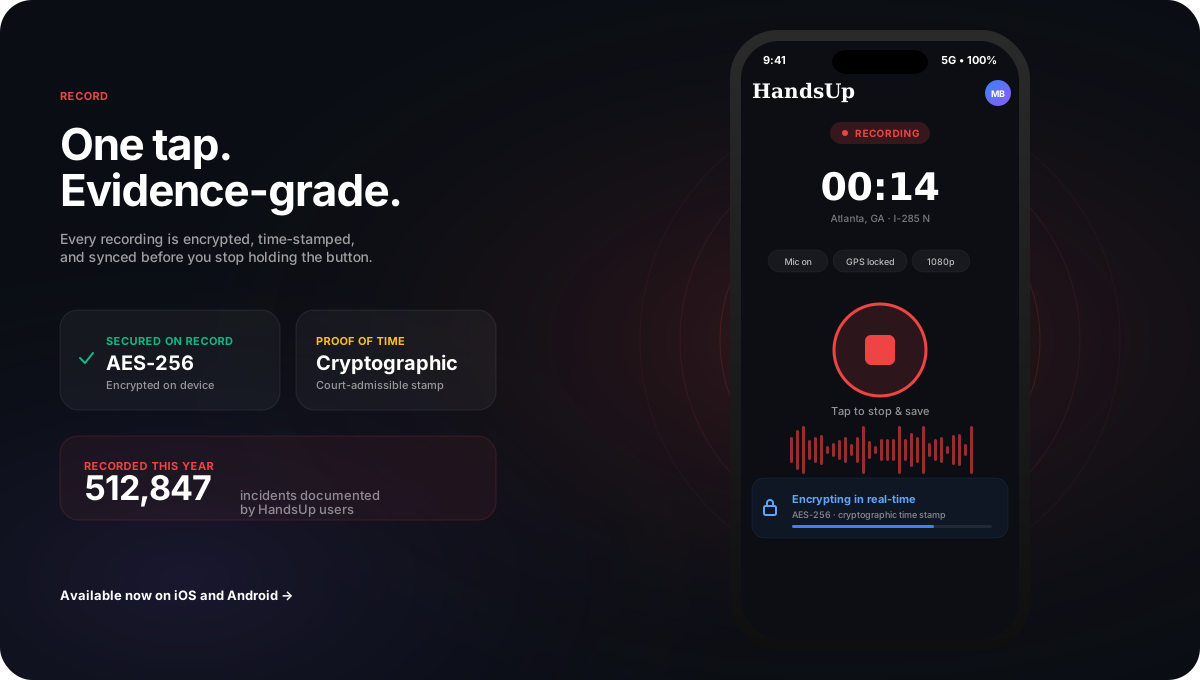
Once you press record in HandsUp, every word, every gesture, every moment is timestamped, encrypted on your device, and uploaded to secure cloud storage. You don't have to remember what happened. The recording remembers for you.
If your phone is damaged, lost, seized, or runs out of battery, your footage is already in the cloud. Log in from any device to access it. Officers cannot delete cloud-backed recordings even if they take your phone, and your evidence stays exactly where you left it.
Powerful, self-serve product and growth analytics to help you convert, engage.