Legal
In all 50 states, you have the legal right to record on-duty police officers performing their public duties — and in most situations, to record any conversation you're a part of. But "most" isn't "all," and the differences matter when a recording is the only evidence of what actually happened.
This page is a plain-English guide to recording, wiretap, and dashcam laws across the U.S. It's general information, not legal advice for your specific situation.
The default rule: one-party consent
Thirty-eight states and the District of Columbia follow the one-party consent rule. If you're part of the conversation, you can record it without telling anyone else. Including the police. Including in your car. Including on a phone call you're on.
In one-party states, recording a conversation you're not part of — wiretapping — is still illegal.
The exception: all-party consent states
Twelve states require everyone in a conversation to consent to being recorded:
CaliforniaConnecticutDelawareFloridaIllinoisMarylandMassachusettsMichiganMontanaNevadaNew HampshirePennsylvaniaWashington
In these states, you generally need permission from all parties before you can lawfully record private audio. The good news: most state high courts have ruled that public interactions with police officers are not "private" and therefore aren't covered by all-party consent rules. You can usually record cops in public without their permission — even in these twelve states.
"Generally" is doing real work in that sentence. Several of these states have nuanced rules. Massachusetts, for example, prohibits secret recording but allows openly visible recording. Connecticut and Nevada have civil/criminal split rules. If you live in one of the twelve, learn the specifics — or let HandsUp's state-aware notifications tell you what's required where you are.
Recording police officers
The federal courts of appeals for the 1st, 3rd, 5th, 7th, 9th, 10th, and 11th Circuits have all ruled that the First Amendment protects the right to record on-duty police officers in public places, subject to reasonable time, place, and manner restrictions.
In plain language: as long as you're not physically interfering with their work, you can:
Stand at a reasonable distance and recordContinue recording if asked to stop — you don't have to complyRefuse to hand over your phone or unlock itRefuse to delete the footage
Officers may not seize your phone without a warrant or arrest you for the act of recording alone. If they do, it's likely a civil rights violation — and the footage you captured is exactly the evidence you'd need to prove it.
What's not protected:
Recording inside someone's home without permissionRecording in places with a reasonable expectation of privacy (bathrooms, locker rooms, etc.)Recording so close that you physically interfere with police workRefusing lawful orders unrelated to the recording itself
Dashcam laws
Dashcams are legal in all 50 states. The catch: a few states regulate where you can mount them and whether you can record audio.
Mounting. California, Arizona, Florida, Illinois, Minnesota, Nevada, Pennsylvania, Texas, and a handful of others have specific rules about where on the windshield a device can be placed — typically near the lower corner so it doesn't block your view.
Audio. In two-party consent states, your dashcam should not record audio from passengers without their knowledge. Display a small notice sticker, mention it when they get in, or disable audio entirely.
Sharing. Footage you record can be shared with insurers, lawyers, or police — but the same audio-consent rules apply when distributing recordings of private conversations.
What to say if an officer asks you to stop
You're not required to stop recording, but the words you choose matter. Calm, factual statements work best:
"Officer, I'm exercising my First Amendment right to record. I'm not interfering with your work, and I'll stay back at this distance. Am I being detained or am I free to leave?"
That last question is critical. It establishes the legal context of the interaction. If they say you're free to leave, leave. If they say you're being detained, ask why and continue recording.
Don't argue. Don't lecture. Don't get into a debate about case law. Record, comply with lawful orders unrelated to the recording, and let the footage speak in court if it has to.
When a legal recording becomes an illegal one
Even in a one-party-consent state, you can break the law by:
Recording inside a private space you don't have permission to be inTrespassing to get the recordingRecording with intent to commit a crime — extortion, harassment, blackmailHidden recording in two-party states of conversations you're not part ofRecording in violation of specific state harassment statutes
The recording itself is rarely the issue. It's almost always context — what you did to get the recording, or what you intend to do with it — that turns a legal recording into an illegal one.
How HandsUp handles all this
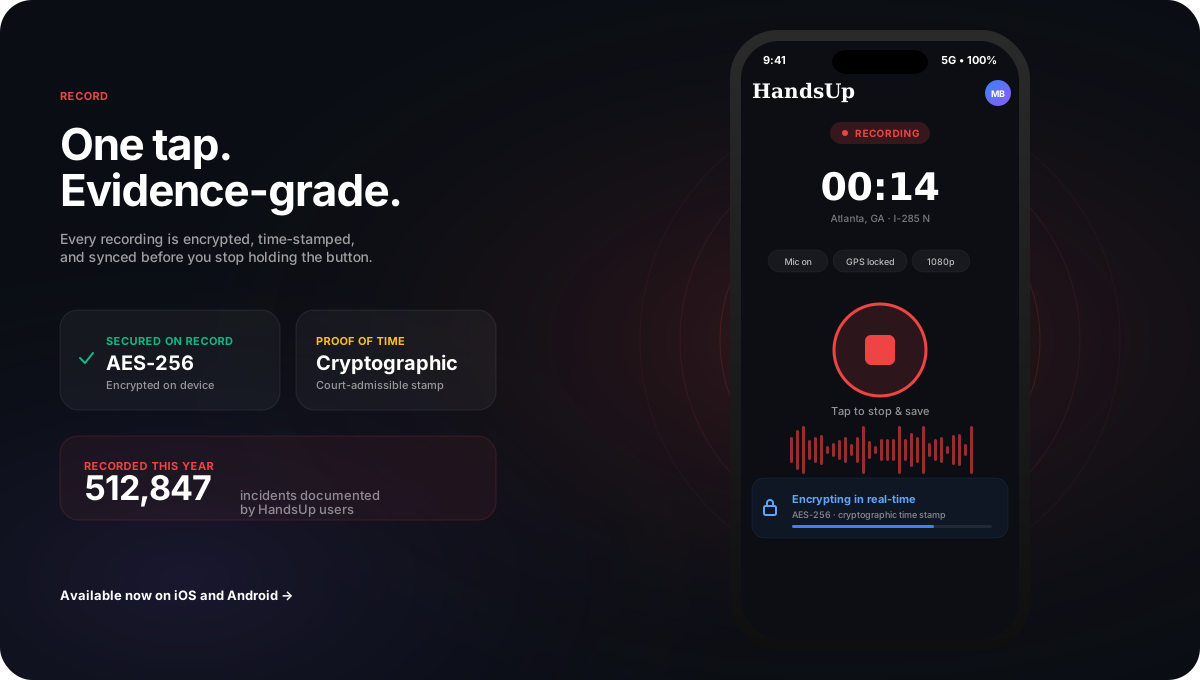
HandsUp shows you the recording rules for the state you're physically in, in plain English, before you hit record. If you cross a state line mid-trip, the app updates. In all-party consent states, the app can play an audible notification at the start of recording so you can document that anyone present was on notice.
Your recordings are end-to-end encrypted on your device and stored in your account. You can delete them at any time, share them with a verified attorney through the in-app network, or download them as evidence.
Important: this isn't legal advice
Laws change. Court decisions shift. The right answer for your situation depends on facts this page can't know. If you've been in an incident or you're planning to record in a sensitive situation, talk to a lawyer. HandsUp's verified attorney network can connect you with one in your state — and the first consultation is always free.